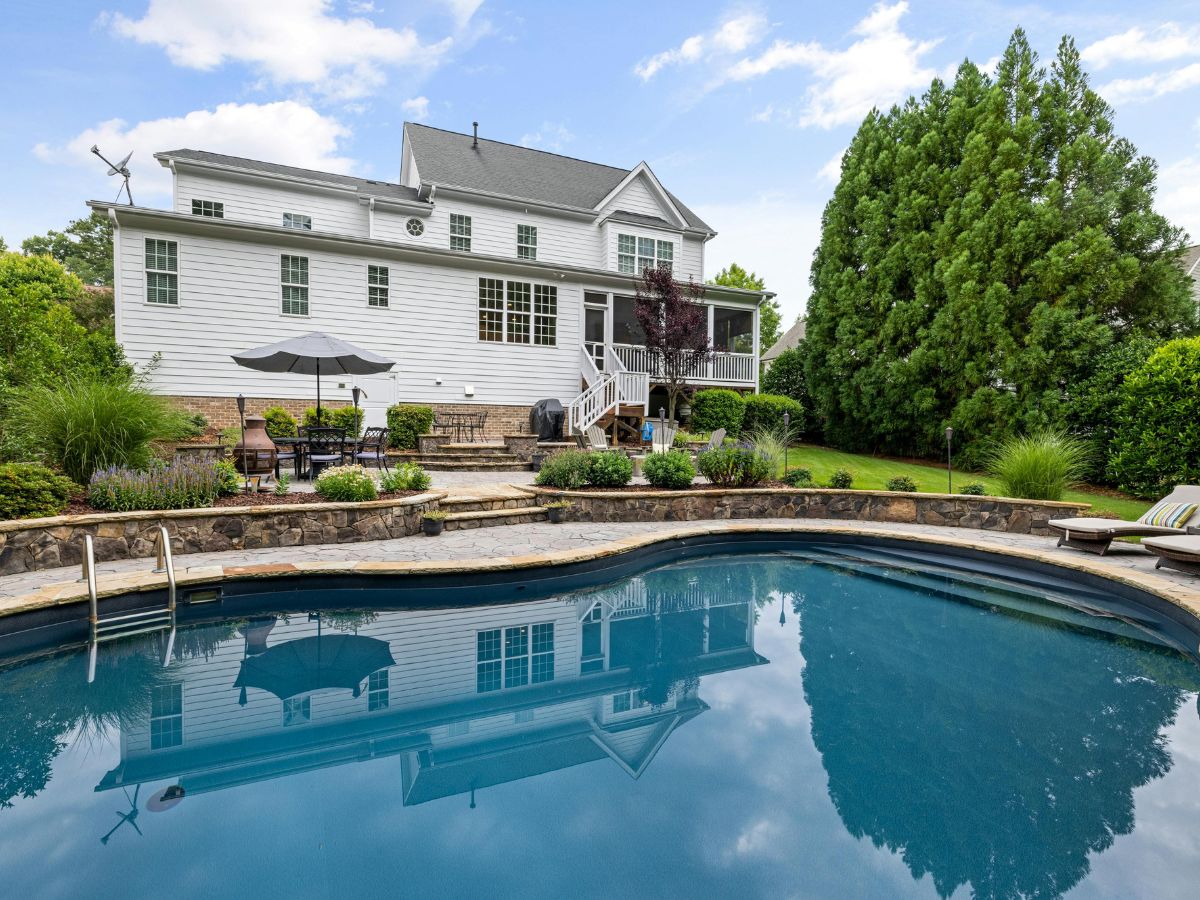
Pool decks have to perform under conditions that would challenge many ordinary outdoor surfaces.
Constant water exposure, bare feet, direct sunlight, pool chemicals, and changing temperatures all influence which materials will remain comfortable, attractive, and durable over time. Choosing the best pool deck materials means looking beyond appearance alone.
Concrete pavers, natural stone, porcelain, brick, and other options vary considerably in slip resistance, heat retention, maintenance needs, installation costs, and design flexibility. The right choice also depends on your climate, pool style, surrounding landscape, and how the space will be used.
Understanding how popular pool deck materials and pavers compare can help you create a surface that complements your backyard while standing up to years of swimming, entertaining, and everyday outdoor living.
How to Choose the Best Pool Deck Materials for Your Backyard
Why Does Pool Deck Material Choice Matter So Much?
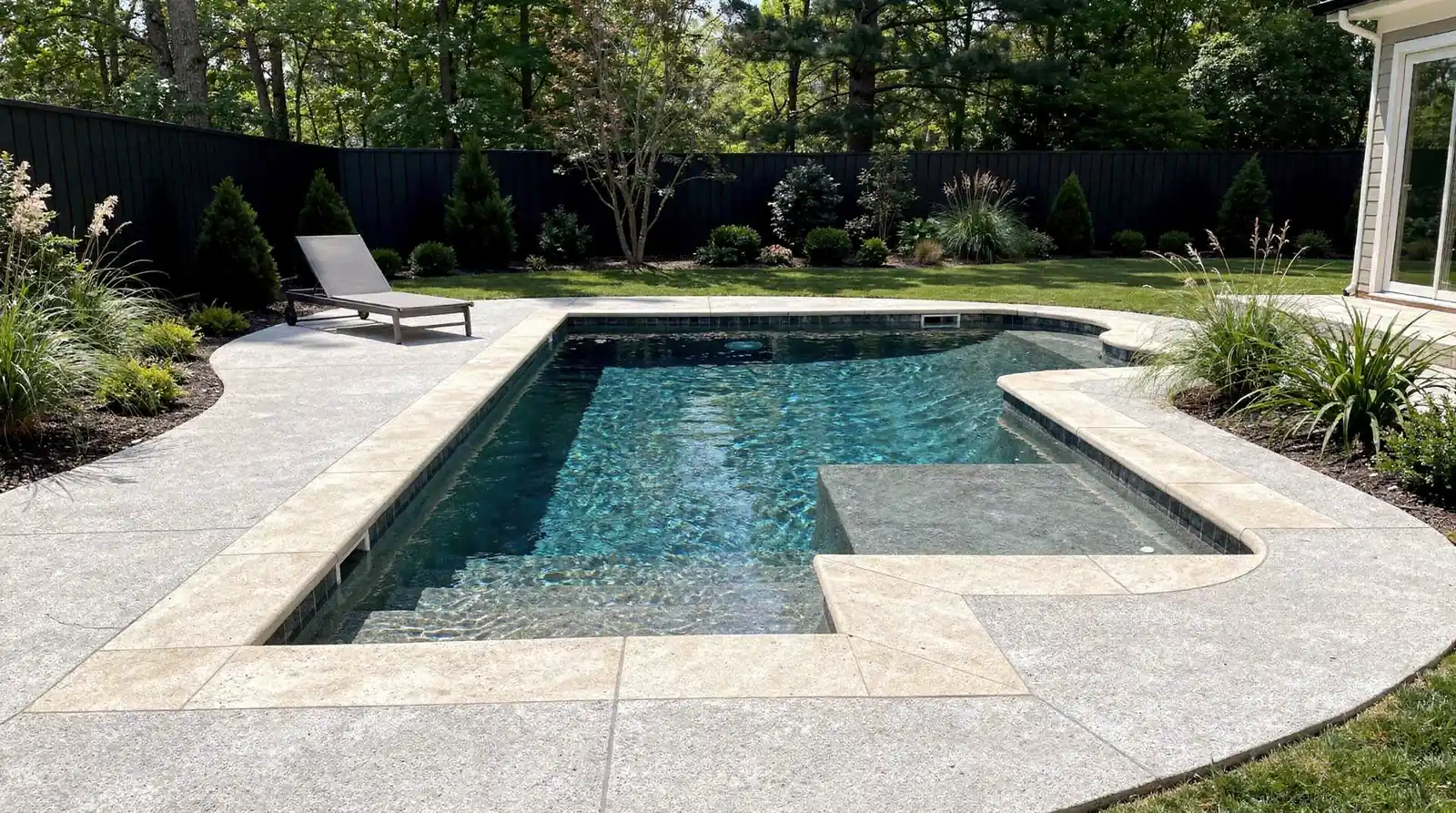
A pool deck has to do more than look good. It needs to remain comfortable under bare feet, provide dependable traction when wet, handle repeated exposure to water and sun, and fit the amount of maintenance a homeowner is willing to take on.
That makes material selection one of the most important decisions in a pool project. The best pool deck materials balance safety, heat performance, durability, appearance, maintenance, and budget rather than excelling in only one category.
Metro Atlanta adds its own considerations. Summer sun can make darker or denser surfaces uncomfortable, while seasonal temperature changes and heavy rain place additional stress on outdoor materials.
Choosing a surface that suits both the climate and the way the pool area will actually be used can prevent years of frustration later.
What Should Homeowners Compare Before Choosing a Pool Deck Material?
Heat retention matters, but it should not be considered in isolation. A lighter-colored material will often stay more comfortable in direct sun than a darker version of the same product, while finish, density, texture, and exposure all influence surface temperature.
Slip resistance deserves equal attention. Pool decks are routinely wet, so a highly polished stone or smooth finish may create more risk than a textured or naturally grippy surface.
Maintenance also varies significantly. Some materials need periodic sealing, while others may require joint-sand replacement, stain treatment, crack repair, or occasional individual-unit replacement.
Clear Water Pools’ overview of pool deck material options compares concrete, natural stone, pavers, tile, wood, and other surfaces based on durability, maintenance, heat, safety, and cost.
Are Pavers One of the Best Pool Deck Materials?
Pavers are a strong option for many pool areas because individual units can move slightly without behaving like one continuous slab. If a paver becomes damaged or stained, it can often be replaced without reconstructing the entire deck.
They also offer considerable design flexibility. Homeowners can choose from different sizes, patterns, colors, textures, and border treatments to coordinate the deck with coping, patios, walkways, and surrounding landscaping.
That does not mean every paver stays cool or requires little maintenance. Dark pavers can still become hot in direct sun, joints may need attention over time, and installation quality matters greatly. Proper base preparation and drainage are essential to reduce settlement and uneven surfaces.
For homeowners comparing the best pool deck materials, pavers are especially worth considering when repairability, visual flexibility, and textured traction are high priorities.
Is Travertine a Good Choice Around a Pool?
Travertine is popular around pools because its natural appearance works well in resort-style designs and many finishes provide useful texture underfoot.
Its thermal performance is another reason homeowners consider it. Light-colored natural stone can remain more comfortable in direct sun than many darker, denser surfaces, although no outdoor deck material stays completely cool during peak summer conditions.
A travertine pool deck also requires thoughtful material selection. Stone varies in density, porosity, finish, and quality. Sealing requirements depend on the particular product and installation, and some finishes provide better wet traction than others.
The larger pool-deck system matters too. Clear Water Pools lists travertine, natural stone, pavers, and concrete among the options used for pool decks and coping, with material choice shaped by comfort, slip resistance, appearance, maintenance, and budget.
Does Concrete Still Make Sense for Pool Decks?
Yes. Plain poured concrete should not be dismissed simply because newer options are available.
Concrete remains one of the most versatile pool-deck materials because it can be brushed, textured, stained, stamped, coated, or finished in lighter colors. Those choices can significantly change how the surface looks and performs.
Its main limitation is that a large concrete slab behaves as a continuous surface. Soil movement, shrinkage, or settlement can produce cracks that are more visible and sometimes harder to repair discreetly than a damaged individual paver.
Surface temperature also varies. Smooth, dark concrete exposed to full sun may become uncomfortable, while lighter-colored or specialty finishes can improve barefoot comfort.
What Do “Cool Deck” Materials Actually Mean?
“Cool deck” is often used loosely to describe surfaces or coatings designed to reduce heat absorption or improve barefoot comfort. It should not be treated as one universal material category.
Reflective color, surface texture, material density, porosity, shade, and solar exposure all influence how hot a deck becomes. A light paver may outperform a dark one, and a textured concrete coating may feel more comfortable than untreated dark concrete.
Texture can also improve traction, but more texture is not automatically better. Very rough surfaces may be uncomfortable on bare feet or harder to clean.
For that reason, homeowners should compare specific products and finishes rather than assuming that anything labeled “cool deck” will perform the same way.
Which Material Is Best for a Hot Atlanta Backyard?
There is no single winner for every property. For maximum design flexibility and easier localized repair, pavers are often appealing.
Travertine and other light natural stones can offer an upscale appearance with good barefoot comfort. Concrete remains attractive for homeowners who want a customizable, often more budget-conscious surface.
Shade should also be part of the decision. Umbrellas, pergolas, trees, covered seating, and other landscape elements can make a major difference in how comfortable a pool deck feels during July and August.
The best pool deck materials are ultimately the ones that fit the whole project: how much direct sun the area receives, how wet the surface will be, how much maintenance is acceptable, what style the homeowner wants, and how easily future repairs can be handled.
What Makes Concrete a Popular Pool Deck Choice?
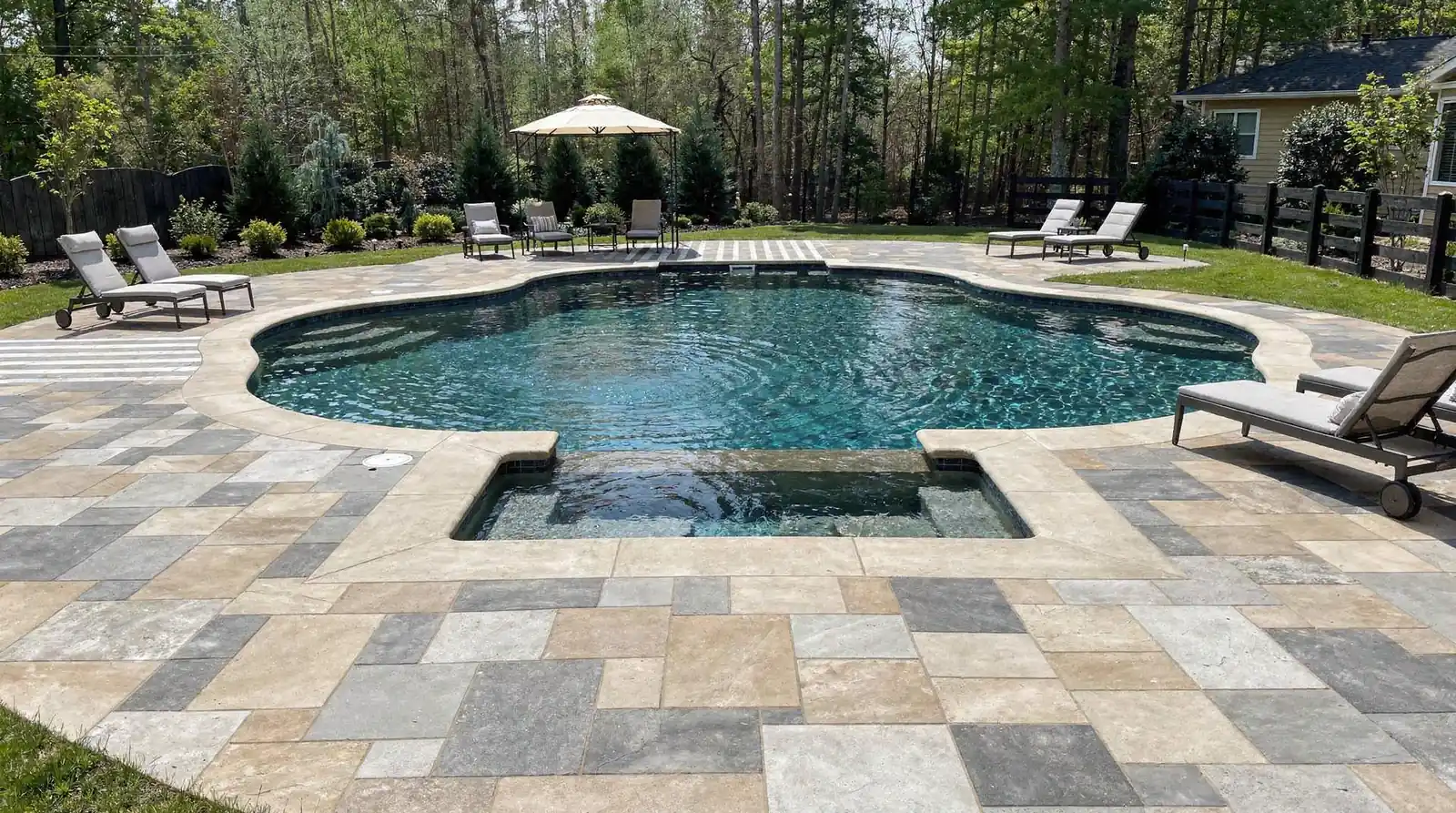
Concrete remains one of the most common pool deck materials because it combines durability, design flexibility, and relatively straightforward installation.
It can be finished in several ways, including broom finishing, stamping, staining, texturing, and specialty coatings, which gives homeowners more control over appearance and barefoot comfort than a plain gray slab might suggest.
Cost is another reason concrete stays competitive. It can provide a large, continuous deck surface without the individual-unit installation required for stone or pavers. That said, price varies considerably once decorative finishes, coatings, demolition, drainage work, or complex layouts are added.
For homeowners comparing the best pool deck materials, concrete is usually strongest when budget, customization, and a clean continuous surface matter more than easy spot repairs.
How Does Concrete Compare With Pavers and Natural Stone?
Concrete, pavers, and natural stone solve different problems. A poured concrete deck creates a continuous surface with fewer joints, which can give the pool area a clean, unified appearance. Stamped and colored finishes can also imitate stone or patterned paving at a lower material cost than some premium alternatives.
Pavers offer a different advantage. Individual units can often be lifted and replaced if one becomes damaged, while repairing a visible crack in poured concrete may be harder to disguise.
Natural stone, including travertine, can provide excellent visual character and comfortable barefoot performance, but material and installation costs can be higher.
Concrete should therefore not be treated as the automatically cheaper or better option. The final comparison depends on deck size, finish, site preparation, drainage, labor, and whether an existing surface must first be removed or repaired.
Does Concrete Stay Cool Enough for Bare Feet?
Concrete can become very hot in direct summer sun, but surface temperature depends on more than the material name.
Color plays a major role. Darker concrete generally absorbs more solar energy than lighter finishes. Surface treatments, coatings, texture, shade, and the amount of direct sun also affect how the deck feels underfoot.
Texture by itself does not necessarily make concrete cooler. A textured finish may improve wet traction, while some specialty coatings or lighter-colored overlays are designed to reduce heat absorption and improve barefoot comfort.
That distinction matters when homeowners are comparing so-called cool deck materials. Rather than assuming one finish will stay comfortable all day, compare the specific product, color, coating, and exposure conditions.
Which Concrete Finishes Work Well Around Pools?
Different finishes change both the appearance and performance of a concrete pool deck. A broom finish is simple and provides useful texture, making it a common practical choice.
Stamped concrete adds patterns that can resemble stone, brick, or pavers, while integral color or staining can soften the appearance of standard gray concrete.
Older concrete can sometimes be updated rather than completely replaced. Clear Water Pools discusses pool deck resurfacing and decorative concrete finishes, including coatings, stamped surfaces, and spray-on cement finishes that can refresh an existing deck.
Resurfacing only works when the underlying slab is a suitable candidate. Significant settlement, widespread movement, or major structural cracking may require more than a cosmetic overlay.
What Are the Main Drawbacks of Concrete Pool Decks?
Cracking is the most familiar concern. Concrete naturally shrinks as it cures, and movement in the underlying soil can create additional stress over time. Proper base preparation, reinforcement, control joints, drainage, and installation practices can reduce risk, but no outdoor concrete slab can be guaranteed never to crack.
Repairs may also remain visible. A patched section can differ slightly in color or texture from the surrounding deck, especially on older concrete that has weathered.
Surface finish needs attention too. Very smooth concrete can become slippery when wet, while an overly aggressive texture may be uncomfortable on bare feet. The goal is enough texture for traction without creating an abrasive walking surface.
Sealers and decorative coatings may require periodic renewal depending on the product, sun exposure, pool chemicals, and traffic.
When Should an Existing Concrete Deck Be Resurfaced or Replaced?
A worn concrete deck does not automatically need full demolition. Resurfacing can make sense when the slab is fundamentally stable but looks faded, stained, worn, or dated. Decorative overlays and coatings can update appearance and texture without rebuilding the entire deck.
Replacement becomes more practical when large sections have settled, cracks show significant displacement, drainage is poor, or previous repairs continue failing. In those situations, covering the surface may hide the symptoms without correcting the underlying problem.
Homeowners already planning a broader pool remodeling project may also find that deck replacement is easier to coordinate while coping, finishes, plumbing, or other surrounding features are being updated.
Is Concrete One of the Best Pool Deck Materials?
For many homeowners, yes, but not because it wins every category. Concrete is especially attractive for homeowners who want a customizable surface, broad design options, and control over the initial project budget.
Pavers may be better for localized repairability, while travertine or other light natural stones may appeal more to homeowners prioritizing barefoot comfort and a higher-end appearance.
The best pool deck materials are the ones that match the site and how the space will be used. Concrete remains a strong contender when the finish, color, drainage, joint layout, and long-term maintenance plan are chosen as carefully as the slab itself.
Why Are Pool Deck Pavers Worth Considering?
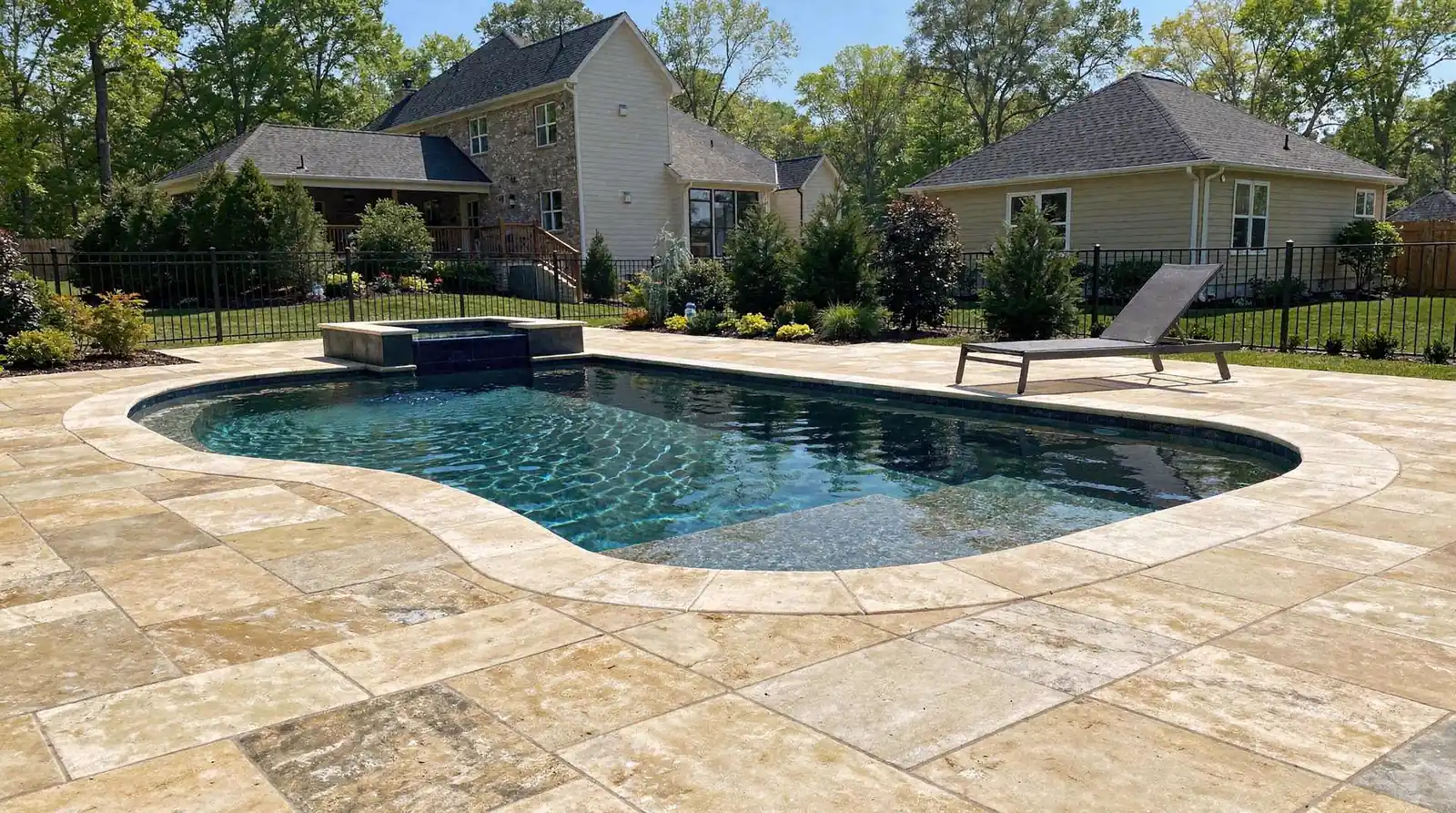
Pool deck pavers appeal to homeowners who want more flexibility than a single poured slab provides. Individual units can be arranged in different patterns, replaced selectively if damaged, and coordinated with coping, walkways, patios, and other hardscape features.
Their biggest advantage is not that every paver automatically stays cooler than concrete. Surface temperature depends on color, density, material, finish, and sun exposure. Instead, pavers stand out for design flexibility, repairability, and the wide range of textured surfaces available for wet pool environments.
For homeowners comparing the best pool deck materials, pavers are often a strong choice when long-term adaptability matters as much as the initial appearance.
How Do Pavers Handle Cracking and Repairs?
A poured concrete slab behaves as one continuous surface. If soil movement or settlement causes a crack, the repair can remain visible even when the slab is structurally sound.
Pavers work differently. Because the surface consists of separate units installed over a prepared base, localized movement may affect only part of the deck. Individual pavers can often be lifted, the underlying base corrected, and the same or replacement units reinstalled.
That does not make pavers immune to problems. Poor base preparation can still lead to sinking, shifting, uneven joints, or drainage issues. Joint material may also need periodic attention. Installation quality matters just as much as the paver itself.
Are Pool Deck Pavers Cooler Than Concrete?
Sometimes, but material and color matter more than the word “paver.” Light-colored concrete pavers can remain more comfortable than darker surfaces because they absorb less solar energy. Dense, dark pavers may still become very hot during an Atlanta summer afternoon.
Some manufacturers also offer pavers designed specifically for reduced heat absorption. Homeowners interested in cool deck materials should compare actual product specifications, colors, and samples rather than assuming every paver will perform the same way.
Shade matters too. Current pool design trends increasingly combine hardscape materials with covered seating, landscaping, and defined circulation areas instead of relying on deck material alone to create a comfortable outdoor space.
What Makes Travertine a Popular Pool Deck Material?
Travertine is a natural limestone valued for its soft color variation, distinctive texture, and high-end appearance. Around pools, it can create the resort-style look many homeowners associate with luxury outdoor spaces without appearing overly polished or formal.
Its lighter color range can also make it comfortable underfoot compared with many darker masonry surfaces. Still, travertine should not be treated as universally “cool.” Surface temperature changes with color, finish, density, direct sunlight, and weather conditions.
Among the best pool deck materials, travertine tends to appeal most to homeowners who prioritize natural appearance, barefoot comfort, and visual connection between the pool and surrounding landscape.
Is Travertine Naturally Slip-Resistant?
Travertine can provide useful traction, particularly when installed with a textured or tumbled finish. However, slip resistance varies by finish.
A polished stone surface behaves differently from a tumbled or textured paver when wet. That makes finish selection particularly important around steps, tanning ledges, coping, and high-traffic areas where swimmers regularly leave the water.
Homeowners should evaluate the actual product being installed rather than relying on the material name alone.
The stone’s naturally varied surface is also part of its visual appeal. Small tonal changes, pores, and differences between individual pieces prevent the deck from looking uniform in the way many manufactured products do.
What Maintenance Does a Travertine Pool Deck Require?
Travertine is durable, but it is not maintenance-free. Because it is porous, the stone can absorb moisture and stains. Depending on the product, installation, and desired appearance, sealing may be recommended. Joints and filled pores can also require attention as the surface ages.
Pool chemicals deserve consideration as well. Splash-out should not be allowed to sit on natural stone indefinitely, and harsh cleaners can damage some surfaces. Routine care generally centers on gentle cleaning, monitoring joints, managing drainage, and using products appropriate for natural stone.
Does Travertine Work With Modern Pool Designs?
Yes. Travertine is often associated with Mediterranean or resort-inspired spaces, but its neutral tones can also work with contemporary architecture. Large-format layouts, simple borders, restrained color palettes, and combinations of natural stone with modern landscaping can make travertine feel clean rather than traditional.
Current pool landscaping ideas also use geometric pavers and pathways to define circulation and connect the pool visually with planting beds and other outdoor zones. The surrounding design often determines whether the finished space feels classic, rustic, or contemporary.
Are Composite Decking and Porcelain Worth Considering?
Pavers and natural stone are not the only premium options. Composite decking can work well where the pool deck is elevated, connected to an existing deck, or designed more like an outdoor living platform than a ground-level hardscape.
It resists many of the moisture-related problems associated with traditional wood and eliminates routine sanding or staining.
However, composite products vary substantially in heat retention and wet traction. Darker boards can become quite hot, so homeowners should compare specific products rather than assuming composite will automatically provide a cooler surface.
Porcelain pavers are another increasingly popular option. They offer consistent color, low water absorption, and a broad range of finishes that can imitate stone, concrete, or other materials. For pool use, exterior-rated products with appropriate wet-slip performance are essential.
How Should Homeowners Compare Premium Pool Deck Options?
The most useful comparison is not simply “concrete versus pavers versus travertine.” Each material performs differently depending on the property and the homeowner’s priorities.
Consider:
- Barefoot comfort: How hot does the specific color and finish become in direct sun?
- Wet traction: Is the chosen finish suitable for a pool environment?
- Repairability: Can damaged areas be addressed individually?
- Maintenance: Will the surface need sealing, joint maintenance, or specialized cleaning?
- Drainage: How will rain and pool water leave the deck?
- Design: Does the material work with the home’s architecture and surrounding hardscape?
- Budget: What are the installation and long-term maintenance costs?
The best pool deck materials are not necessarily the most expensive ones. A properly installed concrete paver can outperform an unsuitable premium stone, while travertine may be worth the added cost for a homeowner who places a high value on barefoot comfort and natural character.
What matters most is choosing the specific material, finish, color, and installation system as one complete decision rather than selecting a product based on appearance alone.
How Does Atlanta’s Climate Affect Pool Deck Material Choice?
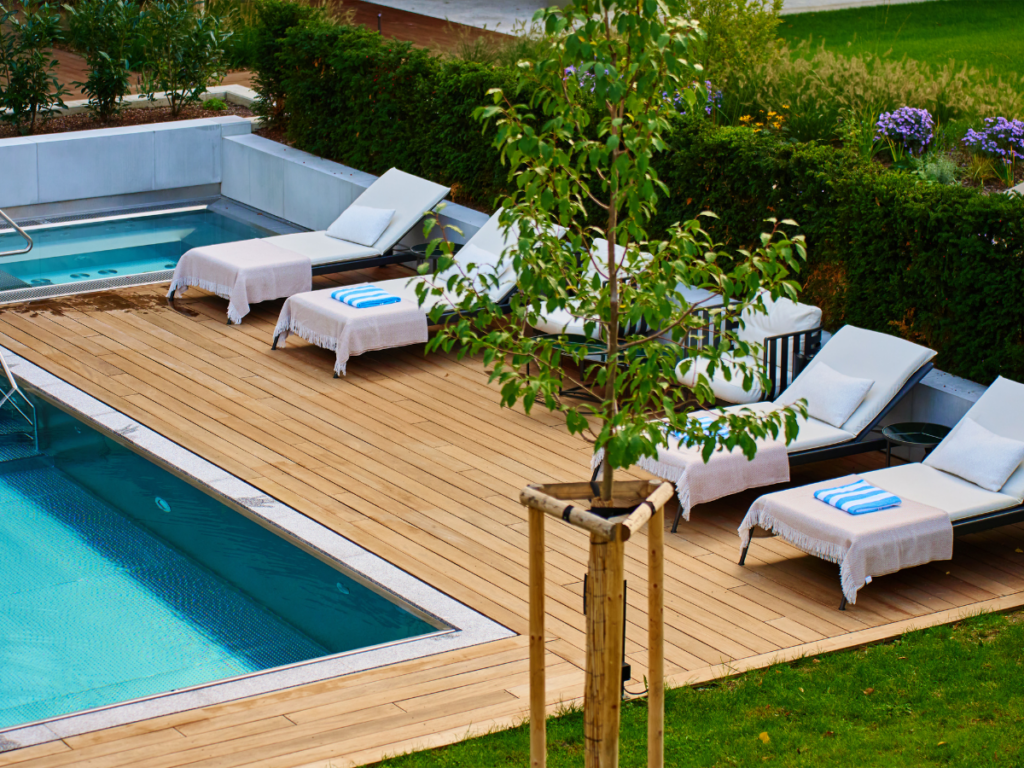
Atlanta’s climate puts pool decking through more than summer heat. Long periods of direct sun, heavy rain, high humidity, seasonal temperature changes, and clay-rich soils can all influence how a deck looks and performs over time.
Those conditions affect surface temperature, drainage, staining, movement, and maintenance needs, which is why a material that performs well in one region may need different installation details in Georgia.
Homeowners comparing the best pool deck materials should therefore look beyond appearance alone. The better question is how a specific material, color, finish, and installation system will respond to heat, moisture, soil movement, and year-round exposure around the pool.
How Does Atlanta’s Summer Heat Affect Pool Deck Surfaces?
Surface temperature becomes one of the most noticeable differences between deck materials during a Georgia summer.
Dark colors and dense materials tend to absorb more solar energy, while lighter shades often remain more comfortable underfoot. Direct sun exposure, nearby shade, surface finish, and even the time of day can change how hot the same material feels.
This means categories such as concrete, pavers, or natural stone do not automatically tell homeowners which surface will be coolest. A light concrete paver may feel more comfortable than a dark natural stone, while specialty coatings can improve the performance of some concrete decks.
Homeowners interested in cool deck materials should compare actual samples in colors and finishes similar to those planned for the project rather than relying on the product category alone.
Why Do Rainfall and Drainage Matter for Pool Deck Materials?
Frequent rain affects both the deck surface and the structure beneath it. Water needs to move away from the pool and surrounding outdoor areas without collecting in low spots, washing out base material, or remaining trapped beneath hardscape surfaces.
Poor drainage can contribute to settlement, staining, algae growth, joint deterioration, and uneven walking surfaces.
Pavers can allow some water movement through their joints, but they still need a properly prepared and drained base. Poured concrete also needs adequate slope and drainage so water does not sit on the surface or repeatedly flow toward vulnerable edges.
A travertine pool deck has its own installation and drainage requirements, especially because natural stone can vary in porosity.
Clear Water Pools’ discussion of local pool repairs and Georgia site conditions notes that heavy rain and drainage need to be considered alongside temperature changes and local soil conditions. Those factors apply to the surrounding hardscape as well as the pool structure itself.
How Do Atlanta’s Clay Soils Affect Pool Deck Stability?
Much of North Georgia has clay-rich soil, which can change volume as moisture conditions shift. Wet clay may soften and expand, while prolonged dry periods can contribute to shrinkage. That movement can place stress on slabs, paver bases, coping, and other hardscape elements if the site is not properly prepared.
This does not mean one deck material automatically solves soil movement. Concrete may crack if the underlying base settles, while poorly installed pavers can sink or become uneven.
Natural stone can also shift if the supporting base is unstable. Good excavation, compaction, base preparation, grading, and drainage are therefore essential regardless of the finished surface.
The best pool deck materials for Atlanta are those installed as part of a complete system rather than placed over inadequately prepared soil. Material durability matters, but the base beneath it often determines how well the finished deck handles seasonal ground movement.
Does Humidity Make Some Pool Deck Materials More Difficult to Maintain?
Humidity by itself is not usually the main structural threat to a pool deck, but warm, damp conditions can encourage algae, mildew, and organic staining on surfaces that remain shaded or wet for long periods.
Areas near landscaping, drainage paths, or frequently splashed portions of the pool may need more frequent cleaning than sections that dry quickly in the sun.
Porous materials such as some natural stones can absorb moisture and stains more readily, while sealed concrete or certain porcelain surfaces may resist absorption more effectively.
That does not automatically make less porous materials maintenance-free. Textured surfaces, joints, shaded areas, and drainage patterns can all collect dirt and organic growth.
The correct cleaning method also depends on the material. Harsh chemicals or aggressive pressure washing can damage some stone, sealers, coatings, and joint materials, so long-term care should be considered before the deck is installed.
How Important Are Atlanta’s Winter Temperature Changes?
Atlanta winters are milder than those in northern climates, but temperatures can still fall below freezing. Materials exposed to repeated wetting and occasional freezing should be appropriate for outdoor use and installed so water does not remain trapped where expansion could cause damage.
The greater concern is often the repeated cycle of heating, cooling, wetting, and drying throughout the year. Concrete expands and contracts, joints move, sealants age, and base materials respond to changing moisture levels.
Clear Water Pools notes that these seasonal changes can contribute to cracking and premature sealant wear around pools in Forsyth County.
Proper control joints, flexible joint materials where appropriate, drainage, and quality installation help accommodate those changes. Selecting an outdoor-rated material is only part of the equation.
Which Pool Deck Materials Make Sense for Atlanta Homes?
There is no single climate-proof winner. Concrete offers flexibility in finish and price but requires thoughtful joint placement and base preparation.
Pavers provide localized repairability and design variety, though their base and joints still need maintenance. Travertine and other natural stones can offer attractive barefoot performance, but porosity, finish, sealing, and drainage need to be considered.
Homeowners comparing the best pool deck materials should focus on the complete combination of surface color, wet traction, drainage, soil preparation, maintenance needs, and sun exposure.
Atlanta’s climate does not make one material universally superior, but it does make installation quality and site-specific planning especially important.
How Does Clear Water Pools Help Homeowners Choose the Right Pool Deck Material?
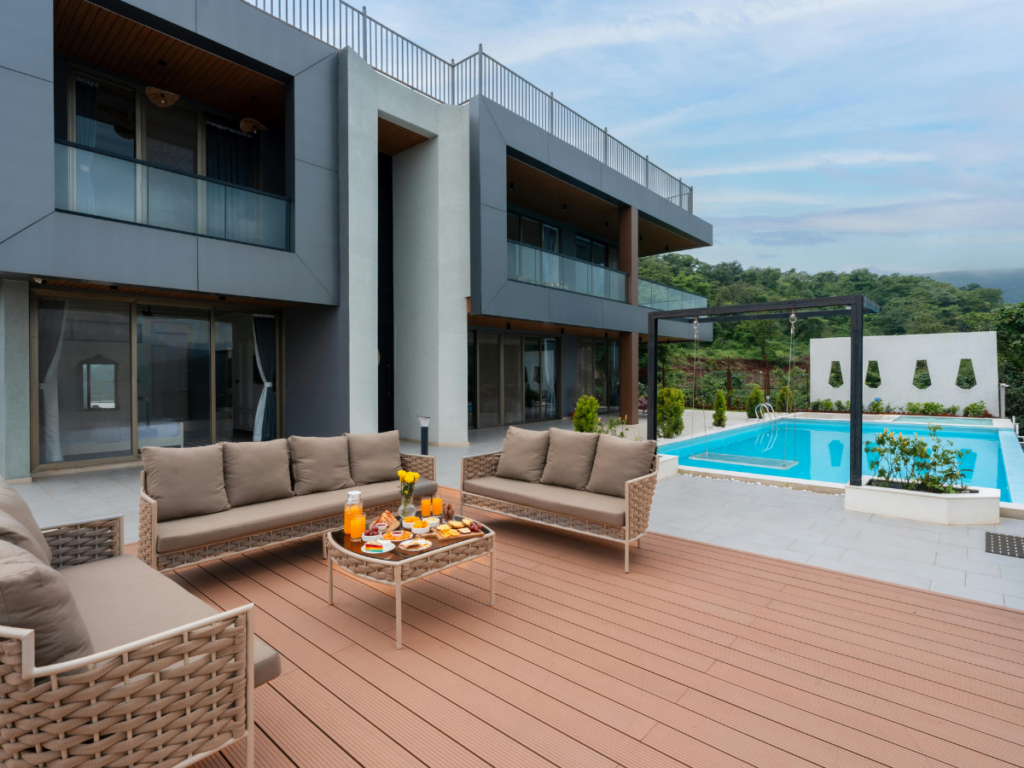
Choosing between concrete, pavers, travertine, and other deck surfaces becomes easier when the decision starts with the property rather than a material catalog.
Clear Water Pools uses an initial consultation and site evaluation to understand the homeowner’s goals, budget, available space, and broader outdoor-living plans before the design is finalized.
That process is useful because the best pool deck materials depend on more than appearance. Sun exposure, drainage, existing hardscape, pool shape, maintenance expectations, and how the area will be used can all affect which option makes the most sense.
A family that prioritizes barefoot comfort may reach a different decision than a homeowner focused on easy repairs, a particular architectural style, or keeping initial costs under control.
What Should Be Discussed During the Initial Consultation?
A productive consultation should narrow the material choices by connecting them to everyday use.
Homeowners can discuss how much direct sun reaches the deck, whether children will use the pool regularly, how much maintenance they are comfortable handling, and whether the new surface needs to coordinate with patios, walkways, landscaping, or other existing features.
Budget should be discussed alongside long-term ownership rather than treated as a simple price-per-square-foot comparison. A lower initial cost may come with different sealing or repair needs, while a premium surface may require specialized maintenance.
Comparing the complete picture makes it easier to decide whether concrete, pool deck pavers, a travertine pool deck, or another surface provides the right balance.
Clear Water Pools offers a free pool and hardscape consultation for homeowners planning new construction, remodeling, decks, and other outdoor features. The company lists office hours from 8:00 a.m. to 5:00 p.m. Monday through Friday and serves Metro Atlanta and surrounding communities.
How Does Site Evaluation Affect Material Recommendations?
The property itself can eliminate or strengthen certain options. A deck area exposed to full afternoon sun may place greater importance on light-colored materials and heat performance, while a shaded site may make staining, algae growth, and drying time more important considerations.
Drainage, grade changes, access, and surrounding soil conditions can also influence the installation method.
This is where comparing the best pool deck materials becomes more specific. Rather than asking whether pavers are generally better than concrete, the homeowner can ask which system is best suited to the actual site and expected use.
Clear Water Pools describes its broader pool construction process as beginning with consultation and design, followed by construction and coordination, then startup and a final walkthrough.
The company also states that decking and hardscaping can be coordinated with the larger pool project, which can help avoid choosing the deck in isolation from the rest of the backyard.
What Happens After a Deck Material Is Selected?
Once the material direction is narrowed down, the design phase becomes more detailed. Color, finish, layout, borders, coping, drainage, transition areas, and surrounding features all need to work together.
This stage is particularly important for materials with a wide range of finishes. Pool deck pavers can vary substantially in color, texture, pattern, and heat retention.
Travertine can differ by finish, density, color, and natural variation. Concrete can be broom-finished, stamped, colored, textured, or resurfaced. Choosing the material category is therefore only the beginning.
Clear Water Pools states that its design process can include 3D visualization before construction begins. For homeowners planning a broader pool or backyard project, that can help show how the deck relates to landscaping, pool shape, seating areas, steps, and other hardscape before materials are installed.
What Questions Should Homeowners Ask Before Approving the Deck?
A good material discussion should produce specific answers rather than broad claims that one product is simply “better.” Before approving the final selection, homeowners should understand:
- How the chosen color and finish perform in direct sun
- What level of wet traction the surface provides
- Whether sealing is recommended and how often maintenance may be needed
- How damaged areas can be repaired
- How drainage and slope will be handled
- What base preparation is required
- How the deck will meet the coping and surrounding hardscape
- Which parts of the material and installation are covered by warranties
Those questions also make estimates easier to compare. Two contractors may quote the same general material while proposing very different base preparation, drainage, finish quality, or installation details.
Why Does the Overall Backyard Design Matter?
A pool deck rarely functions as an isolated surface. It connects the water to seating areas, landscaping, walkways, outdoor kitchens, fire features, and the home itself. Material choice should support those transitions rather than create a deck that looks attractive around the pool but disconnected from everything around it.
For example, a travertine pool deck may work beautifully with natural stone steps and understated landscaping, while geometric pavers may better suit a contemporary pool with clean lines. Concrete can provide a simpler visual foundation when other parts of the outdoor space carry more of the design detail.
The goal is not to choose the most expensive surface or whichever material is currently popular. The best pool deck materials are those that make sense for the property’s climate exposure, maintenance requirements, budget, safety needs, and overall design.
A structured consultation helps turn those factors into a practical material choice rather than a decision based on appearance alone.
Conclusion
Choosing the right pool deck material can make a major difference in the safety, durability, comfort, and appearance of your outdoor space.
Pavers, natural stone, concrete, and other options each offer different advantages, so it is important to consider factors such as heat retention, slip resistance, maintenance, weather exposure, and how well the material complements your pool and home.
Professional planning and installation can help create a pool deck that looks polished while standing up to years of use.
For custom pool design and professional backyard pool solutions, choose Clear Water Pools Atlanta. If you’re ready to create a pool and surrounding space designed for lasting style and enjoyment, call 770-406-8638 to speak with the team at Clear Water Pools Atlanta or request your pool estimate today.